Events

Receiving a diagnosis of pemphigus or pemphigoid (P/P) can feel overwhelming, and it’s natural to search for meaning in a journey that may seem uncertain at first. While these conditions bring their own challenges, they can also be an opportunity for growth, resilience, and connection. In this post, we’ll explore how patients and caregivers can find a sense of purpose and strength in their experience, discovering new ways to live fully while navigating the ups and downs of life with (P/P).

Reflective practices:

You may be changed, but you are not broken.

Next Time: “Be the Help You Once Needed: Volunteer with the IPPF

If you are in a crisis or need immediate support, please don’t wait.
Call or text the 988 Suicide & Crisis Lifeline at 988—available 24/7, free and confidential.

If you or someone you know is in immediate danger, please call 911 or go to the nearest emergency room.

Living with pemphigus or pemphigoid can be isolating, especially when symptoms like pain, fatigue, or visible flares make it hard to socialize or keep up with your usual routine. It’s understandable if you’ve pulled back from friends, family, or activities you once enjoyed.

But connection matters. Whether it’s a quick text, a virtual chat, or a heartfelt conversation with someone who truly gets it, staying connected – even in small ways – can have a big impact on your emotional well-being.

In this message, we’ll share a few simple ways to maintain and rebuild meaningful connections, even on the hardest days. Because you are not alone and you deserve support that makes you feel seen, heard, and valued.

Ways to stay connected:

  • Be Honest About How You’re Feeling – Let your loved ones know when you’re having a tough day. A simple “I’m not up for a long talk, but I’d love a quick check-in” keeps the lines of communication open without adding pressure.
  • Use Technology to Stay Close – Video chats, voice messages, and even group texts can help you feel involved when going out isn’t possible. Virtual support groups can also connect you with others who understand life with pemphigus or pemphigoid.
  • Pace Yourself Socially – It’s okay to say no when your body needs rest. Prioritize the connections that feel meaningful and energizing rather than draining. Even short, positive interactions can make a big difference.
  • Lean on Peer Support – Talking with someone who has walked a similar path can ease loneliness and help you feel seen. IPPF’s Peer Coach Program or support groups offer safe spaces to share and learn from others.
  • Reconnect in Small, Low-Energy Ways – Send a card, share a favorite memory, or comment on a friend’s post.These small acts keep you engaged and help others know you still care, even if you’re not always able to show up in big ways.

You don’t have to go through this alone. Here are some resources to find additional information and support:

  • Mental Health America – Living with Chronic Illness: mhanational.org/chronic-illness
    • Offers information on how chronic health conditions affect mental health and provides tools for coping with anxiety, depression, and stress
  • National Alliance on Mental Illness (NAMI): nami.org
    • Find free support groups, education, and a helpline for people managing mental health challenges—including those with chronic or rare diseases.
  • Psychology Today – Find a Therapist: psychologytoday.com/us/therapists
    • Use your zip code to search for therapists experienced in chronic illness, trauma, anxiety, or grief. Many offer telehealth appointments.
  • Rare Disease Mental Health Resource Hub – NORD: rarediseases.org/mental-health
    • A hub created specifically for rare disease patients and caregivers, with articles, webinars, and personal stories focused on mental and emotional well-being.

Next Time: “Travel Tips for People with Pemphigus or Pemphigoid”

Ramesh Swamy

This spotlight was recently featured in the American South Asian Network (ASAN).

When the IPPF named Ramesh Swamy its new Board President, the decision fused professional acumen with lived experience. The Vadakkencherry, Kerala born, Los Angeles-based financier founder of boutique merchant bank Halifax West, was diagnosed with pemphigus vulgaris a decade ago. That detour from spreadsheets to skin biopsies ignited what Swamy calls his “second startup”: building a support ecosystem for patients who often feel marooned by rarity and misdiagnosis.

Swamy’s résumé reads like a collision of Wall Street and Hollywood. After an early stint in Morgan Stanley’s structured – finance group, he launched Halifax West in 2016, advising middle-market companies on M&A, corporate restructurings, and principal investments most recently in climate-tech and digital-health ventures.

Beyond the balance sheet, Swamy moonlights as an executive producer with London/ Los Angeles studio Anna Barbara Films, backing documentaries that champion underrepresented voices. Board service is a through-line: Legal Aid Foundation of LA, Association for Corporate Growth, and now IPPF. Colleagues describe him as “equal parts spreadsheet and soul.”

Pemphigus vulgaris and related pemphigoid disorders are rare, potentially life-threatening autoimmune diseases that cause painful blisters across skin and mucous membranes. Because incidence hovers around one to five cases per million, diagnosis often drags on for months especially among South Asians, who face a disproportionately higher prevalence. Delays amplify infection risk, scarring, and emotional isolation.

The IPPF steps into that vacuum by pairing patients with trained peer coaches, funding clinician-education webinars, and maintaining a Natural History Registry that scientists mine for treatment clues. Swamy joined the board in 2018; as president he’ll now steer strategy, fundraising, and advocacy.

Read the full article here.

April 28, 2025

Navigating life with pemphigus or pemphigoid (P/P) can be a challenging journey, filled with uncertainty and questions. Whether you’re newly diagnosed or have been living with these rare autoimmune diseases for years, one thing remains constant: Knowledge is power. Understanding your condition, treatment options, and the latest research can empower you to take control of your health and improve your quality of life.

P/P are complex diseases that affect each person differently. Symptoms, triggers, and treatment responses vary widely, making it essential for patients and caregivers to be well-informed. Learning about the disease can help patients recognize symptoms early, understand treatment options, and communicate effectively with their healthcare team.

For those newly diagnosed, the journey can be overwhelming. “I felt so alone when I was first diagnosed. I didn’t know what pemphigus was or how to manage it,” shared one patient. “Finding accurate information helped me understand my symptoms and gave me hope.” Education helps demystify these diseases, reducing anxiety and empowering patients to make informed decisions about their care.

Even for those who have been on this journey for a while, continuous learning is crucial. Research is constantly evolving, and new treatments are emerging. Staying informed about the latest advancements ensures that you are aware of all available options and can advocate for the best possible care.

One of the most effective tools for learning about P/P is the IPPF’s Patient Education Series (PES) webinars. They are designed to provide patients and caregivers with reliable, up-to-date information from leading experts in the field. They cover a wide range of topics, including disease mechanisms, treatment options, symptom management, and the latest research developments.

These webinars offer the unique opportunity to learn directly from dermatologists, immunologists, and researchers who specialize in P/P. Participants can ask questions and learn practical strategies for managing their condition.

“The PES webinars have been a game-changer for me,” shared a patient. “I’ve learned so much about treatment options and how to manage my symptoms. It feels empowering to understand my disease and know that I have a community of support.”

One of the most significant challenges for individuals with P/P is navigating treatment options. The webinars provide detailed explanations of available treatments, including corticosteroids, immunosuppressants, and newer biologic therapies. Understanding how these treatments work and their potential side effects allows patients to have informed conversations with their healthcare providers.

Additionally, the webinars highlight the latest research in the field. With ongoing studies on new therapies and a better understanding of disease mechanisms, staying informed ensures that patients are aware of cutting-edge treatment options.

Beyond education, PES webinars foster a sense of community. Living with a rare disease can be isolating, but these webinars allow patients to connect from around the world as we realize we have similar experiences, no matter where we live. Our experiences, challenges, and successes build a supportive network where people feel understood and less alone.

The IPPF is committed to supporting patients at every step of their journey. Our PES webinars are just one of the many resources designed to empower and educate the P/P community. By staying informed, you are not just learning about your disease—you are taking control of your health and building a stronger, more connected community.

To learn more about our upcoming webinars or to watch past recordings, visit the IPPF website. Together, we can face the challenges of P/P with knowledge, resilience, and hope.

Healing Heroes are the heart of our community. They go above and beyond to support the IPPF community by making sustaining, monthly gifts to support our mission of improving the quality of life for all those affected by pemphigus and pemphigoid. Join Toby and become a Healing Hero today.


Do you remember being diagnosed?

That feeling of being alone with a rare disease?

Most newly diagnosed patients have never met another
person with pemphigus or pemphigoid (P/P).

That’s where IPPF Peer Coaches come in. 

An IPPF Peer Coach is often the first person a patient connects with who “gets it.” Here’s your chance to make sure that the Peer Coach program can continue.

monthly gift of $30 or more allows IPPF Peer Coaches to support 75 members of our community by providing them with resources, tips, and tricks on how to live and thrive with P/P. They help patients know that they’re not alone. 

Introducing Toby, a pemphigus patient . . . 

Toby became a Healing Hero determined to pay it forward so other patients don’t have to feel alone. Don’t miss her compelling story.

Make a contribution like Toby did . . . 

Give what you can now

“I could not have gone it alone, and I want others to experience the same comfort and support I received. Help me pay it forward and fund the future by becoming a Healing Hero.”

Monthly Sustaining Gift Options

IMPROVE PATIENT ACCESS TO CARE ($15)
Your monthly gift of $15 allows us to screen and add a new medical professional to our Find a Doctor map, increasing patients’ access to care.

HELP THE NEWLY DIAGNOSED ($30)
Your monthly gift of $30 allows our Peer Coaches to support 75 members of our community by providing them with resources, tips, and tricks on how to live and thrive with pemphigus and pemphigoid.

ACCELERATE DIAGNOSIS TIMES ($75)
Your monthly gift of $75 raises disease awareness by educating 75 medical professionals through our Biopsies Save Lives campaign. 

FUND ESSENTIAL RESEARCH ($100)
Your monthly gift of $100 helps us conduct the ongoing Natural History Study to better understand pemphigus and pemphigoid.

Become a Healing Hero

By becoming a Healing Hero, you provide for the greater good of our community by sharing our vision:

NO DISEASE IS TOO RARE FOR A CURE!

Healing Heroes are the heart of our community. They go above and beyond to support the IPPF community by making sustaining, monthly gifts to support our mission of improving the quality of life for all those affected by pemphigus and pemphigoid. Join Sally and become a Healing Hero today.


Make better patient “access to care” a reality.

Become a Healing Hero.

And start making a difference today.

Because pemphigus and pemphigoid are so rare, it can be difficult for patients to find doctors with experience in treating these diseases. Sally, a mucous membrane pemphigoid (MMP) patient, became a Healing Hero in 2017, shortly after being diagnosed. Her local doctors were unfamiliar with the disease, but luckily, she was able to find a local specialist through the IPPF’s Find a Doctor map.

“Without the IPPF, I don’t know what I would have done. But I do know that my treatment would have been tragically delayed. I highly encourage you to become a Healing Hero and pay it forward so that the IPPF is there for us as well as for those with pemphigus and pemphigoid around the world.” 

A monthly gift of $15 or more would make a tremendous difference, help patients like Sally, and allow us to screen and add new medical professionals to our Find a Doctor map, increasing patients’ access to care. 

Monthly Sustaining Gift Options

IMPROVE PATIENT ACCESS TO CARE ($15)
Your monthly gift of $15 allows us to screen and add a new medical professional to our Find a Doctor map, increasing patients’ access to care.

HELP THE NEWLY DIAGNOSED ($30)
Your monthly gift of $30 allows our Peer Coaches to support 75 members of our community by providing them with resources, tips, and tricks on how to live and thrive with pemphigus and pemphigoid.

ACCELERATE DIAGNOSIS TIMES ($75)
Your monthly gift of $75 raises disease awareness by educating 75 medical professionals through our Biopsies Save Lives campaign. 

FUND ESSENTIAL RESEARCH ($100)
Your monthly gift of $100 helps us conduct the ongoing Natural History Study to better understand pemphigus and pemphigoid.

Become a Healing Hero

By becoming a Healing Hero, you provide for the greater good of our community by sharing our vision:

NO DISEASE IS TOO RARE FOR A CURE!

Healing Heroes are the heart of our community. They go above and beyond to support the IPPF community by making sustaining, monthly gifts to support our mission of improving the quality of life for all those affected by pemphigus and pemphigoid. Join Dr. Donna Culton (University of North Carolina at Chapel Hill) and become a Healing Hero today.


Join the heart of our community and become a healing hero.

“I became a Healing Hero because I wanted to give back to the IPPF… Please join me in paying it forward by becoming a Healing Hero today.”

Monthly gifts allow us to not only sustain current programs, but also expand our key areas of operation: patient support, education, awareness, research, and advocacy.

Monthly Sustaining Gift Options

IMPROVE PATIENT ACCESS TO CARE ($15)
Your monthly gift of $15 allows us to screen and add a new medical professional to our Find a Doctor map, increasing patients’ access to care.

HELP THE NEWLY DIAGNOSED ($30)
Your monthly gift of $30 allows our Peer Coaches to support 75 members of our community by providing them with resources, tips, and tricks on how to live and thrive with pemphigus and pemphigoid.

ACCELERATE DIAGNOSIS TIMES ($75)
Your monthly gift of $75 raises disease awareness by educating 75 medical professionals through our Biopsies Save Lives campaign. 

FUND ESSENTIAL RESEARCH ($100)
Your monthly gift of $100 helps us conduct the ongoing Natural History Study to better understand pemphigus and pemphigoid.

Become a Healing Hero

By becoming a Healing Hero, you provide for the greater good of our community by sharing our vision:

NO DISEASE IS TOO RARE FOR A CURE!

This December, we’re sharing stories from people who have have helped unite our global community so that patients don’t feel as alone. We’ve made great strides in recent years, but there is still much work to be done. Even in times of economic uncertainty, we each have a deep reserve of generosity, and can make a difference.


Make an impact and unite our global community

Rob’s Story

If someone with a rare disease can consider themselves lucky, I am lucky to have found the IPPF and the annual Patient Education Conference only a few weeks after being diagnosed with pemphigus vulgaris (PV). The 2020 conference made a huge difference in my quality of life. The conference came at a critical point during my initial treatment and helped me understand my diagnosis and how to care for my mouth and skin. Most importantly, I heard from expert physicians about treatment options, including steroid sparing medications. The knowledge I gained from the conference allowed me to advocate for myself and make educated treatment decisions with my doctors.

I’ve continued to actively participate in the IPPF Patient Education Webinars. These webinars are an amazing opportunity to learn about PV and to pose questions to national experts. I even found my current dermatologist from one of these webinars. The webinars also cover important topics related to living with an autoimmune disease. The IPPF’s coverage of Covid and the updates provided on clinical research have been especially valuable. I also appreciate the advocacy that IPPF does on Capitol Hill for our conditions. Raising awareness with legislators and agencies, like the FDA, is critical for improving our lives and treatment options.

The IPPF has made a big difference in my life and managing my PV. I am grateful for the work it does, and I am proud to make donations to support this work.

Our mission is to improve the quality of life for all people affected by pemphigus and pemphigoid. Join Rob and donate to the IPPF to help us ensure that our patient support programs are available to all those who need them today, tomorrow, and for years to come.

Interested in sustaining your impact by becoming a Healing Hero with a monthly donation instead? Check out our Healing Heroes program here.

This December, we’re sharing stories from people who have have helped unite our global community so that patients don’t feel as alone. We’ve made great strides in recent years, but there is still much work to be done. Even in times of economic uncertainty, we each have a deep reserve of generosity, and can make a difference.


Maria Hernandez

Maria’s Story

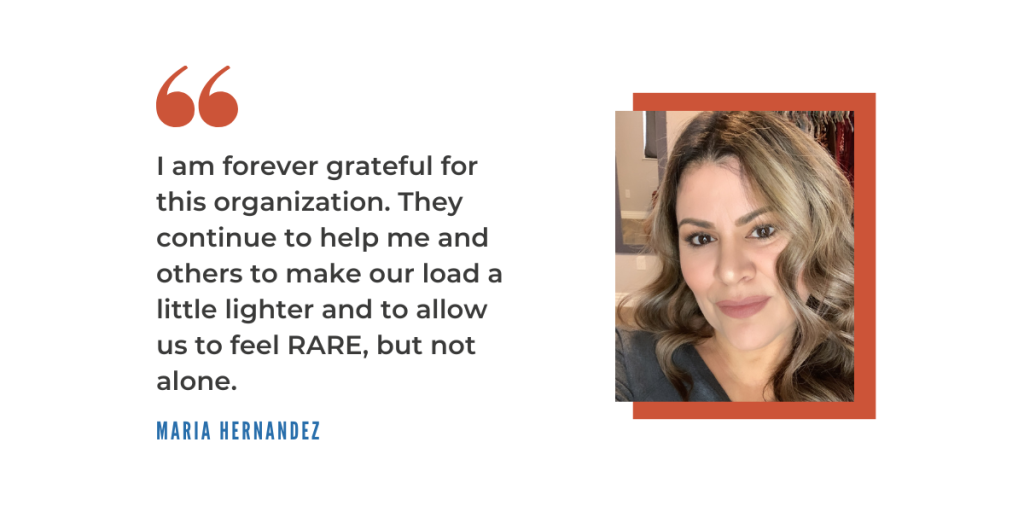
“I connected with the IPPF in 2017 when I was diagnosed with pemphigus vulgaris (PV). After numerous doctor and ER visits, with no relief or answers, I connected with IPPF peer coach, Mei Ling Moore. She immediately emailed me, and personally called me to introduce herself and tell me about the IPPF. She guided me to the right doctors at UCSF, in San Francisco, CA. Mei Ling made herself available for any questions and concerns and followed up with me after my first appointment. I continue to stay in touch with any questions and update her with my continued progress. The IPPF has been very supportive through my journey to remission. I am forever grateful for this organization. They continue to help me and others to make our load a little lighter and to allow us to feel RARE, but not alone. Join me in giving back to others in our community, by donating to the IPPF community today.”

In 2022, we’ve helped 500 people navigate through the journey of living with pemphigus and pemphigoid through our Peer Coach program. Your tax-deductible donation ensures programs like this are available to all those who need them today, tomorrow, and for years to come. Join us to unite our global community, now through the end of the year.

Interested in sustaining your impact by becoming a Healing Hero with a monthly donation instead? Check out our Healing Heroes program here.

This December, we’re sharing stories from people who have have helped unite our global community so that patients don’t feel as alone. We’ve made great strides in recent years, but there is still much work to be done. Even in times of economic uncertainty, we each have a deep reserve of generosity, and can make a difference.


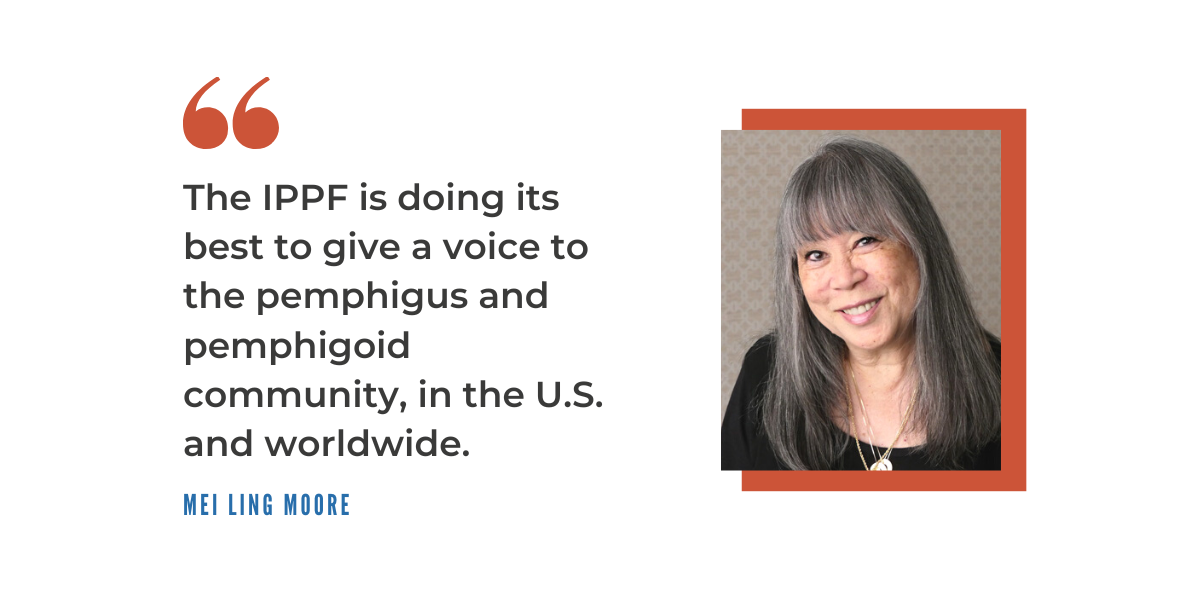
The IPPF is doing its best to give a voice to the pemphigus and pemphigoid community, in the U.S. and worldwide.

Mei Ling’s Story

Mei Ling was diagnosed with pemphigus vulgaris (PV) in 2002. She reached remission in 2012, the same year she started as an IPPF Peer Coach. In addition to this role, she organizes the Southern California Support Group meeting with Marc Yale.

When Mei Ling was asked how she started as a Peer Coach and what she wants the pemphigus and pemphigoid (P/P) community to know about the IPPF, Mei Ling said:

“I had just retired from my job at an architectural firm when I was asked by the Executive Director of the IPPF at the time, Will Zrnchik, if I would like to become a peer coach. He had noticed that at one of the IPPF Patient Education Conferences I attended, that I was very outgoing and I interacted well with the other patients. He also knew that I was very helpful at most of the Southern California support group meetings which Marc Yale organized. When he asked me, I was rather taken aback, because I didn’t think I was professional enough to join the organization, but he assured me otherwise. Janet Segall and Marc Yale were very helpful to me in learning how to effectively help patients who asked for assistance.”

“The IPPF is doing its best to give a voice to the pemphigus and pemphigoid community, in the United States, and worldwide. There are over 7,000 rare diseases that we know of, and more than 350 million people living with one worldwide, and few FDA approved treatments for P/P patients (as is the case with other rare diseases). The IPPF advocates for more research and awareness, and helps P/P patients everywhere through Patient Education webinars and by providing peer support through the Peer Coach program.”

Our goal at the IPPF is to improve the quality of life for all people affected by pemphigus and pemphigoid. Join us to unite our global community, now through the end of the year. Your tax-deductible donation ensures our patient support programs are available to all those who need them today, tomorrow, and for years to come.

Interested in sustaining your impact by becoming a Healing Hero with a monthly donation instead? Check out our Healing Heroes program here.

This December, we’re sharing stories from people who have have helped unite our global community so that patients don’t feel as alone. We’ve made great strides in recent years, but there is still much work to be done. Even in times of economic uncertainty, we each have a deep reserve of generosity, and can make a difference.


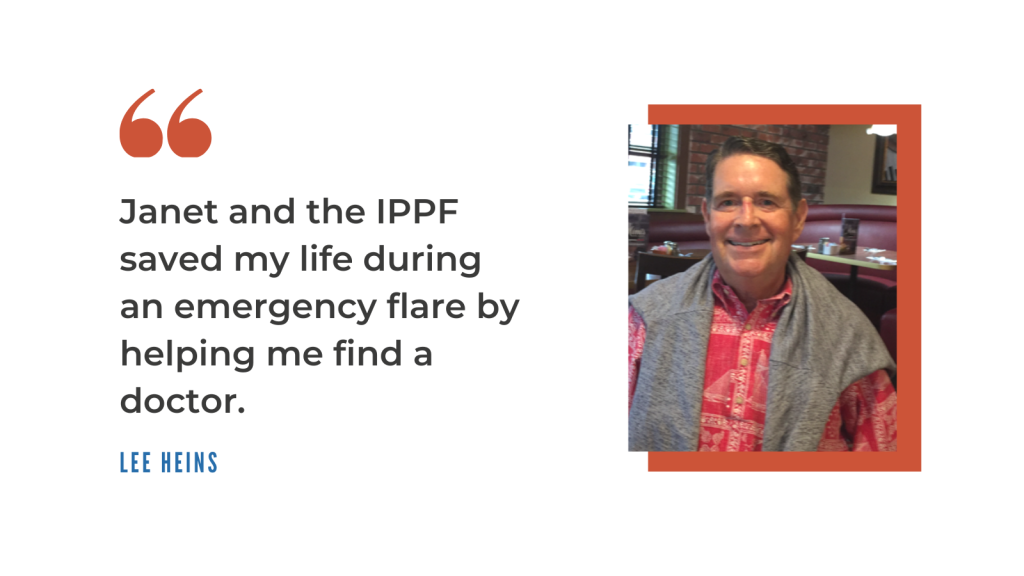
Janet and the IPPF saved my life during an emergency flare by helping me find a doctor. -Lee Heins

Lee’s Story

I became symptomatic with pemphigus vulgaris October 31, 1994. This was the same month that Janet Segall founded the IPPF. Janet found me as a result of an introduction letter she sent to many Southern California dermatologists, and in particular, a Kaiser dermatologist friend of mine. 

Five months later, I attended the first Los Angeles Support Group Meeting. This was my first introduction to the amazing IPPF community. Five years later, Janet and the IPPF saved my life during an emergency flare by helping me find a doctor at USC Medical Center. My gratitude to the IPPF later led me to join the Board of Directors and serve as the Treasurer.

Please join me in supporting the IPPF. Family and friends may also make a donation in your honor by selecting the “dedication option.”

Our goal at the IPPF is to improve the quality of life for all people affected by pemphigus and pemphigoid. Join us to unite our global community, now through the end of the year. Your tax-deductible donation ensures our patient support programs are available to all those who need them today, tomorrow, and for years to come.

Interested in sustaining your impact by becoming a Healing Hero with a monthly donation instead? Check out our Healing Heroes program here.

This December, we’re sharing stories from people who have have helped unite our global community so that patients don’t feel as alone. We’ve made great strides in recent years, but there is still much work to be done. Even in times of economic uncertainty, we each have a deep reserve of generosity, and can make a difference.


When I started the Foundation, my main focus was to connect with others and to help patients.

Janet Segall was diagnosed with pemphigus vulgaris in 1983. She founded the IPPF in 1994 with the goal of connecting others and helping patients. She continues to support patients as a Peer Coach, a role she has had for almost 10 years. “When you are diagnosed with such a rare disease as pemphigus and pemphigoid, one of the most difficult things is to find others to relate to. It makes you feel alone, like you’re the only one with the disease. A Peer Coach can help someone in so many ways. As a Peer Coach, I get to help patients understand their disease and their feelings. A Peer Coach has been there, so they can be there for both patients and their support system.”

When she was asked how people can get involved with the IPPF, Janet suggested:

“There are so many ways. You could volunteer your time, share your story, or participate in a clinical trial. However, sometimes volunteering isn’t possible so making a donation can have a huge impact. You could either make a one-time donation, or become a Healing Hero. Healing Heroes make monthly donations and help keep the IPPF alive to make sure we are always present for others who are diagnosed with these diseases.” 

Our goal at the IPPF is to improve the quality of life for all people affected by pemphigus and pemphigoid. Join us to unite our global community, now through the end of the year. Your tax-deductible donation ensures our patient support programs are available to all those who need them today, tomorrow, and for years to come.

Interested in sustaining your impact by becoming a Healing Hero with a monthly donation instead? Check out our Healing Heroes program here.

By Michael Rigas, Pharm.D.


Pass the Mic with Dr. Mike the Pharmicist

The first video in our new series, Pass the Mic with Dr. Mike, the Pharmacist is available.

Patients with Autoimmune Blistering Diseases (AIBD) may require multiple oral, topical, and intravenous drugs to obtain the best clinical outcomes. Obtaining this drug therapy requires the patient to interact with multiple physicians, pharmacists, pharmacies, drug wholesalers, and insurance companies. What is the pharmacists’ role in this process? 

In many respects, the pharmacist acts as the coordinator of this process since they function at the intersection of the physician’s prescription, the drug makers’ FDA-approved product, the drug wholesaler, the insurance company’s authorization and payment for the medication, and the patient, for whom all these actions are taken. 

Relative to the patient experience, the pharmacist’s main duties can be categorized into five main areas. Let’s discuss each separately to see how it impacts the patient’s experience and clinical outcome.

  1. Prescription processing: This is the main coordinating function the pharmacist manages for the patient. When the prescription is received (usually electronically nowadays), the pharmacist compares the drug ordered to the patient’s diagnosis, history, and physical to see that there is a match and that there are no major issues such as the patient’s allergies, the inventory in the pharmacy or the drug wholesaler at that time, the insurance companies formulary and approved diagnosis that would allow coverage for the drug for the patient that is for their disease. The pharmacist also verifies what the patient’s coverage would be and what the patient’s out-of-pocket costs would be, and verifies that the prescriber is licensed to prescribe in the patient’s state of residence. They also check to verify that the physician is not on any state or federal list of prescribers who are barred from prescribing for many reasons. Finally, the pharmacist tabulates the time needed to accomplish all of these events to assure the availability of the drug and how rapidly the patient needs the drug to match. 

In some instances, for oral generic drugs, this whole process may be accomplished in 15 minutes or less. But, in other more complex cases that involve costly oral, topical, or intravenous medications, this process may take days or weeks. This may depend on the availability of the drug, the possible need for more patient clinical data to be submitted, additional laboratory testing, etc., that may be required to obtain authorization for the ordered therapy from the insurance company. This protracted process may involve written appeals by the physician/pharmacy or a telephone consultation with the prescribing doctor and the insurance company’s doctors. 

  1. Patient support and safety: During the many steps in the above process, the pharmacist analyzes multiple issues and data points to assure that the likelihood of clinical, temporal, logistical, and financial harm to the patient is minimized. This may involve checking for allergic responses to ordered medications based on their history, or checking to see that the time needed to complete the above process is consistent with the acuity of the patient’s needs and other planned activities ( i.e., other medical procedures or tests, vacations, etc.), and that the out-of-pocket costs that the patient will be facing as a result of the ordered medications are minimized. 
  1. Patient education: This is an important function where the pharmacist compiles information from various sources and shares with the patient details about drug dosage and dose frequency, expected rapidity of drug effect, drug storage, expected drug side effects, and whom to call if an issue occurs. Education may also include issues surrounding home safety, fall prevention, and tips to better manage the other diseases the patient may have relative to the newly ordered drug therapy. 
  1. Billing and associated actions with the insurance company: One of the most important functions of the pharmacy and pharmacist is their “customer service” functions which mostly surround the insurance company’s billing on behalf of the patient and adjudicating the patient’s out-of-pocket costs. On the one hand, this function may be completely managed electronically in a few minutes for inexpensive oral medications. Alternatively, this function may take days or weeks for more expensive, infused medications. Interaction between the pharmacy, the payor, and the ordering physician is typically required initially, and maybe in an ongoing fashion if the authorization is denied and an appeal is needed, to obtain the payor’s authorization for payment. 

While this is happening, the pharmacist is evaluating the out-of-pocket exposure to the patient for the drug(s) ordered to see if there is anything clinically equivalent that is available that may result in a lesser out-of-pocket cost to the patient. Suppose there is a less costly, clinically equivalent product available. In that case, the pharmacist calls the ordering physician to discuss it with them, get the order changed, and then reaches out to the payor for authorization reflecting the new lowered out-of-pocket costs.

Finally, suppose the patient cannot afford their out-of-pocket costs. At the patient’s request, the pharmacy may explore drug company-based and non-profit foundation-based financial assistance programs for which the patient may qualify. The sum of these programs may make the drug affordable to the patient.

  1. Regulatory compliance: This is a complex concept. It ensures that all the data collected from each patient’s prescription processing and dispensing is properly collected, stored, and reported to the inquiring party. These parties include:
    1. The state board of pharmacy
    2. The patient’s insurance company
    3. Medicare
    4. Medicaid

The pharmacist must also assure that the prescriber is licensed to prescribe the exact products ordered in the patient’s state and is not on any lists of suspended or disbarred prescribers.  

These audits may be known and planned for or may be a surprise in nature. Poor performance in these audits may result in the pharmacy being sanctioned, removed from the payor contract, fined, or closed down. 

As you can see, there are a lot of actions behind the scenes that make the pharmacist a key player in the healthcare team. Pharmacists are extremely knowledgeable about the medications you have been prescribed and are traditionally underutilized by patients, and their role is often misunderstood. I hope this information has helped you better understand the pharmacist’s important role in your healthcare and well-being.  

Join us in uniting our global community today and every day. Even in times of economic uncertainty, we each have a deep reserve of generosity, and can make a difference.


Giving Tuesday

Our goal at the IPPF is to improve the quality of life for all people affected by pemphigus and pemphigoid. Join us in uniting our global community this Giving Tuesday. We’ve made great strides in recent years, but there is still much work to be done.

Together, we can unite our global community by:

  • connecting patients with Peer Coaches 
  • sharing resources about living with P/P
  • advocating for better access to care

Your support directly impacts patients like Ellen, who is “living successfully with pemphigus, along with several other pem-pals and blister-sisters in Boston.” Join Ellen in uniting our global community on this global day of giving. Your support is critical in ensuring that our programs are available to all those who need them today, tomorrow, and for years to come.

The IPPF community brings together patients, caregivers, top physicians, and researchers to improve the quality of life for all people affected by pemphigus and pemphigoid through early diagnosis and support.

Your tax-deductible donation ensures our patient support programs are available to all those who need them today, tomorrow, and for years to come.

Interested in sustaining your impact by becoming a Healing Hero with a monthly donation instead? Check out our Healing Heroes program here.

This year we’re kicking off Giving Tuesday by sharing how the IPPF has made an impact in patient’s lives. Join us in uniting our global community on November 29. Even in times of economic uncertainty, we each have a deep reserve of generosity, and can make a difference.


Giving Tuesday 2022

Our goal at the IPPF is to improve the quality of life for all people affected by pemphigus and pemphigoid. Join us in uniting our global community for Giving Tuesday on November 29. We’ve made great strides in recent years, but there is still much work to be done.

Together, we can unite our global community by:

  • connecting patients with Peer Coaches 
  • sharing resources about living with P/P
  • advocating for better access to care

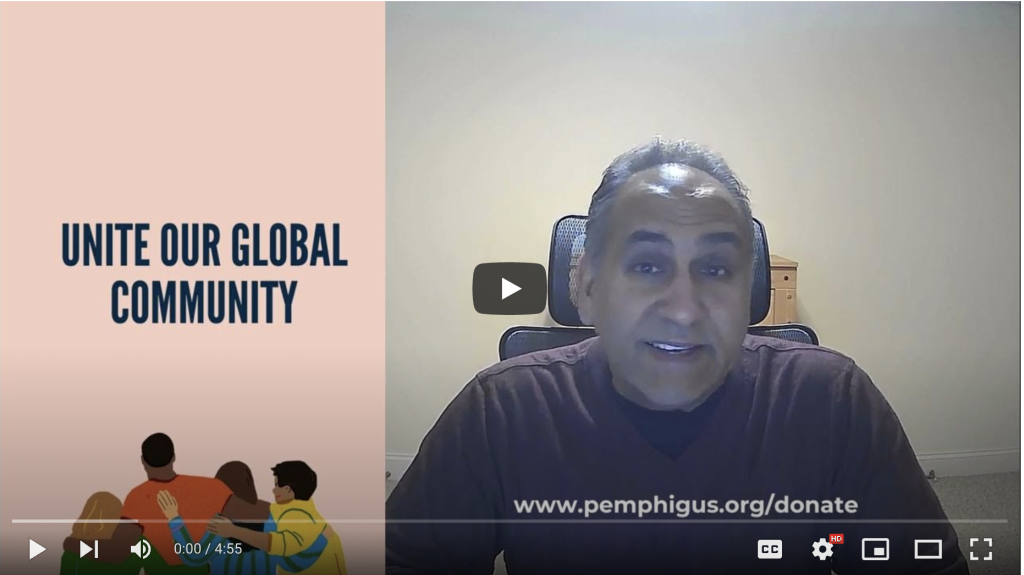
Check out IPPF Peer Coach Scott Taub’s video to learn more about how the IPPF’s invaluable resources have helped Scott and how you can get involved to make an impact on Giving Tuesday.

The IPPF community brings together patients, caregivers, top physicians, and researchers to improve the quality of life for all people affected by pemphigus and pemphigoid through early diagnosis and support.

Your tax-deductible donation ensures our patient support programs are available to all those who need them today, tomorrow, and for years to come.

Interested in sustaining your impact by becoming a Healing Hero with a monthly donation instead? Check out our Healing Heroes program here.

Our “Inspiring Hope” series shares patient stories from around the world that show what it’s like to live—and thrive—with pemphigus and pemphigoid. This week’s story, Foundation of Hope, comes from Janet Segall, the founder of the IPPF.


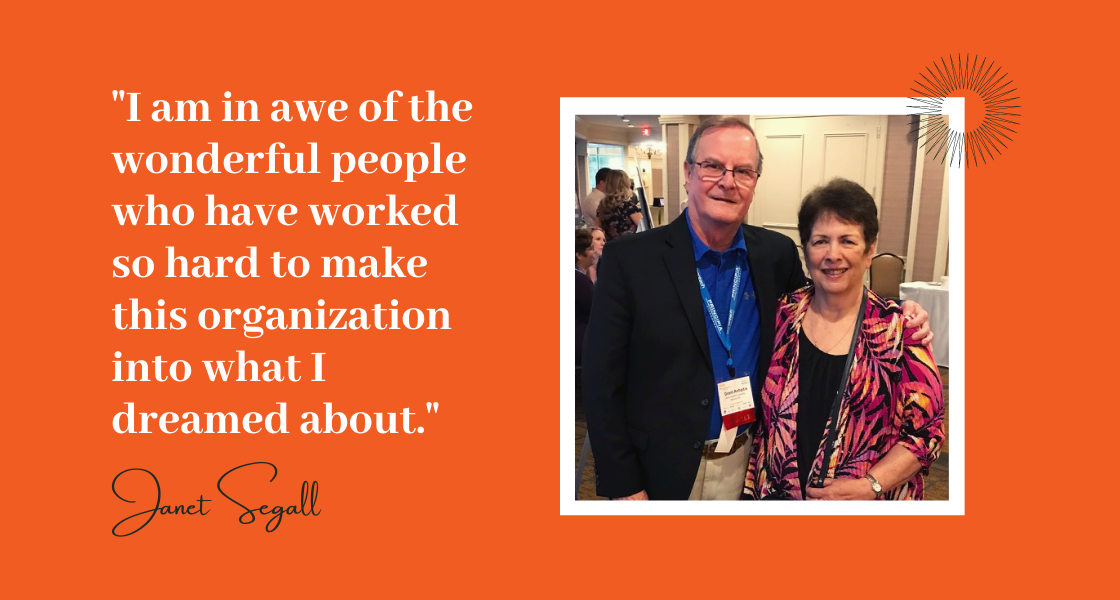
I am in awe of the wonderful people who have worked to make this organization into what I dreamed about.

I know many of you can relate to how it first felt being diagnosed with pemphigus or pemphigoid (P/P). After about a year of symptoms, I was diagnosed in 1983 and in a daze. I was in my mid-thirties and raising a child by myself. She was six years old. 

Although it took about a year to get an official diagnosis, I got one pretty quickly once I had more than one or two lesions. Prior to receiving a diagnosis, I went to the dentist to get my teeth cleaned and mentioned to him that I had these body and mouth sores. He got a book from his shelf (no internet yet), opened the page to pemphigus vulgaris (PV), and read, “sores on the body, sores in the mouth—this could be pemphigus vulgaris.” As he read the description of the disease, I knew that was what I had. The last words he read were, “This is a fatal disease.” I walked out of his office with my head down, feeling numb; his staff looked at me like I was a corpse. My first thought was about who would take care of my daughter since she had lost her dad when she was a baby.

I wanted to find other patients. First, I called my doctor and asked if she had heard of a support group or foundation, and she told me there were none. I felt very alone. I thought a lot about starting my own organization right away, but I hadn’t reconciled the fact that I had this disease. Finally, after living with PV on and off for over 10 years, I decided to start a foundation.

The National Pemphigus Vulgaris Foundation was born in 1994 with help from one of the finest dermatologists in the country, Dr. Grant Anhalt, at Johns Hopkins University. He supported me throughout the entire process. The Foundation started as a support network for PV patients, but we later added pemphigus foliaceus and pemphigoid. When the Foundation became the International Pemphigus and Pemphigoid Foundation (IPPF), it was exciting. Traveling overseas to Israel, Italy, and London to start support groups was thrilling. Uniting people from across the globe in their quest for answers made me feel that I had done something good.

The Foundation’s main vision when it started in 1994 was to make sure that no one with P/P would ever feel alone like I did during those first years after I was diagnosed. I am in awe of the wonderful people who have worked so hard to make this organization into what I dreamed about. Thank you to everyone who is committed to this endeavor.

I am so grateful for experiencing the growth and success of the first 26 years of the IPPF. For the next 26 years, I hope for a cure for P/P and that more people will continue to care and help each other.

Janet Segall is the Founder of the IPPF and a PV patient since 1983. She is a peer health coach and works in Sacramento, CA in the mental health field. 

Fund the Future

Be a Healing Hero

Healing Heroes fund the future of the IPPF community by making sustaining, monthly gifts to support our mission of improving the quality of life for all those affected by pemphigus and pemphigoid.

By becoming a Healing Hero, you provide for the greater good of our community by sharing our vision:

NO DISEASE IS TOO RARE FOR A CURE!

Whether you’re a patient, caretaker, family, friend, medical professional, or rare disease advocate, your monthly gift allows us to not only sustain current programs, but also expand our key areas of operation: patient support, education, awareness, research, and advocacy.

Fund the future. Be a Healing Hero!

Our “Inspiring Hope” series shares patient stories from around the world that show what it’s like to live—and thrive—with pemphigus and pemphigoid. Our fourth story comes from David Baron in Chicago, IL.


My story starts in 2004. I was a happy, healthy 28-year-old enjoying my life. I was an airline pilot working my dream job, and life could not have been better. All that changed when my body decided to attack itself. I was on a layover in August 2004, when I woke up with a nasty sore throat. It felt like I had swallowed broken glass and I thought I had strep. I had one flight home, and I went straight to urgent care. The doctor told me that my tonsils were ulcerated, it was likely viral, and it would clear up in a week. After one week, my tonsils healed, and I went back to work. 

Things were good for about a month, then my sore throat came back even worse. This time, I went to an emergency room. The nurse did a strep test, and when she pulled the swab out of my mouth, it was covered in blood. Shocked, she quickly left to get the doctor. A number of x-rays and exams were performed, and about 15 vials of blood were taken. All of the test results came back normal, and the doctors didn’t know what was wrong. They recommended I see an ear, nose, and throat (ENT) specialist.

When I saw the ENT the following week, he told me it was bacterial and that I needed antibiotics. I was on and off antibiotics for the next three months, and the sores in my mouth appeared and disappeared every few weeks. By late 2004, my ENT told me I needed to have my tonsils removed. As an adult, the recovery from that surgery was not easy. 

Things seemed to be better for a few months, but in late February 2005, the sores in my mouth returned. I felt it was time for a second opinion. I found a new primary care doctor who told me, “I don’t know what you have, but I’ll help you find out.” That was something I needed to hear. Even though I didn’t have answers, I felt better that I had a doctor willing to admit that they didn’t know.

My mouth sores continued to get worse, and my doctor continued running tests that all came back normal. Eventually it got so bad that I had trouble eating and drinking, and I became dehydrated. I was admitted to a local hospital. I had a team of infectious disease doctors working on me. They tested over 20 vials of blood each day, and again the results came back normal. I was sent home without any answers. 

A week after I came home from the hospital, I started getting blisters on my chest. My primary care doctor referred me to a local dermatologist, and I will never forget that appointment. The dermatologist walked into the office, saw my chest, and said, “I know what you have, it’s very serious, and I can’t treat it.” He referred me to the University of Chicago and wrote the words pemphigus vulgaris on a piece of paper.

The first thing I did after that appointment was search online for pemphigus. The first result I found scared me. It said that if the disease didn’t kill me, the treatment would. Luckily, the second result was the International Pemphigus and Pemphigoid Foundation (IPPF). The IPPF website had significant information on treatments and living with pemphigus. While I was still scared, the information I found helped me feel more at ease. 

I was now under the care of a dermatologist who had treated pemphigus before, but the initial treatments were not working. I was still continuing to get worse every day. One particular low point was the day my treating doctor walked into my hospital room and said, “I don’t know what other treatments to try.” When I was at my low point, the IPPF was there for me. I needed to find an expert, and the IPPF helped. Through the IPPF I found one of the most knowledgeable dermatologists in the world. I emailed him on a Monday, and he replied within 30 minutes, asking if I could come in two days later to see him. Thanks to that doctor and the IPPF, I not only recovered, but I spent 13 wonderful years in remission. 

Even today, the IPPF is still there when I need them. I recently had a flare, and after spending 13 years in remission I needed to find a new treating dermatologist. With the help of the IPPF and the Find a Doctor map, I was able to find a very knowledgeable new doctor. Any time I’ve needed help, the IPPF has been there for me.

David Baron is a pilot for a major airline in the United States. He lives in the Chicago area with his family.

Fund the Future

Be a Healing Hero

Healing Heroes fund the future of the IPPF community by making sustaining, monthly gifts to support our mission of improving the quality of life for all those affected by pemphigus and pemphigoid.

By becoming a Healing Hero, you provide for the greater good of our community by sharing our vision:

NO DISEASE IS TOO RARE FOR A CURE!

Whether you’re a patient, caretaker, family, friend, medical professional, or rare disease advocate, your monthly gift allows us to not only sustain current programs, but also expand our key areas of operation: patient support, education, awareness, research, and advocacy.

Fund the future. Be a Healing Hero!

Welcome to our “Inspiring Hope” series. For the next several weeks, we’ll share patient stories from around the world that show what it’s like to live—and thrive—with pemphigus and pemphigoid. Our second story comes from Ellen Levine in Boston, Massachussetts, USA.

Ellen Levine is from Boston. She works at a foundation that supports leading scientists at Harvard Medical School and at institutions in Italy in the pursuit of scientific discovery in the field of medicine. She was the recipient of Harvard Medical School’s 2019 Dean’s Community Service Staff Award for her work with the IPPF.


During the months that led up to my pemphigus diagnosis in 2007, the range of emotions I felt were not unusual. My emotions were very similar to those patients before me who had also experienced the uncertainty and confusion that arises when debilitating and painful symptoms mysteriously appear out of the blue.

I was filled with an overwhelming fear of the unknown and had so many questions. What was wrong with my mouth, why weren’t these painful erosions healing, why were my gums bleeding, and what were these raw, scaly lesions on my scalp? 

My quest to find a specialist who could diagnose and treat this miserable condition felt like a never-ending nightmare. Awash in anxiety, I worked my way through an endless maze of obstacles, medical appointments, and insurance entanglements. I felt like Dorothy, frightened, following the yellow brick road in search of the Wizard of Oz.

The one thing that provided me with a sense of security and stability during that tumultuous time was the IPPF. Knowing that an organization like the IPPF existed was a dramatic turning point for me. Knowing I wasn’t alone in navigating a rare and persistent chronic illness gave me hope.

My initial involvement with the IPPF was as an active participant in the former email listserv group. Back in the day, before the creation of an IPPF Facebook page, an old-fashioned listserv was how pemphigus and pemphigoid (P/P) patients communicated regularly with one other. Each day, I looked forward to emails popping up in my inbox from people around the world who were also affected by these rare illnesses. People asked questions and gave advice while interjecting humor, understanding, and compassion in their correspondence. I made new friends who helped alleviate my fears and answered my questions. Facilitated by the IPPF, I learned so much from this community in those early days.

I was also fortunate to have consulted with Janet Segall, the founder of the IPPF and a peer health coach, who also answered my many questions while offering comfort and support.

Over the years, I’ve attended two IPPF Patient Education Conferences and have volunteered for the IPPF in multiple roles as a patient educator, awareness ambassador, Boston Support Group leader, and booth leader at the annual Yankee Dental Congress in Boston.

The IPPF lives up to its mission by improving the quality of life for all people affected by P/P through early diagnosis and support. And it’s my fervent hope that the IPPF’s vision of finding a cure comes to fruition. However, the IPPF can’t do any of this without help. The IPPF gives to us, and we should give to the IPPF in whatever capacity we can. Whether through volunteering or financial giving, we too, can make an impact.   

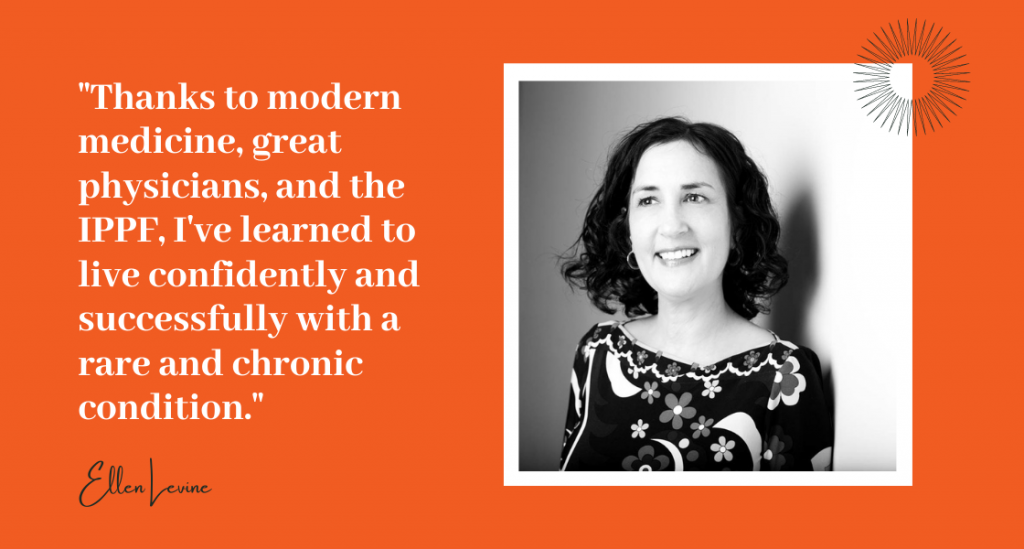
Thanks to modern medicine, great physicians, and the IPPF, I’ve learned to live confidently and successfully with a rare and chronic condition. Because of the IPPF, I don’t feel alone with my disease. I encourage anyone who has been diagnosed with—or suspects they may have—pemphigus or pemphigoid to connect with the IPPF, which has grown in leaps and bounds since my diagnosis in 2007. You will be in the best of hands.

Fund the Future

BECOME A HEALING HERO

Healing Heroes fund the future of the IPPF community by making sustaining, monthly gifts to support our mission of improving the quality of life for all those affected by pemphigus and pemphigoid.

By becoming a Healing Hero, you provide for the greater good of our community by sharing our vision:

NO DISEASE IS TOO RARE FOR A CURE!

Whether you’re a patient, caretaker, family, friend, medical professional, or rare disease advocate, your monthly gift allows us to not only sustain current programs, but also expand our key areas of operation: patient support, education, awareness, research, and advocacy.

Fund the future. Be a Healing Hero!

Welcome to our “Inspiring Hope” series. For the next several weeks, we’ll share patient stories from around the world that show what it’s like to live—and thrive—with pemphigus and pemphigoid. Our first story comes from Noel Mudibo in Kenya.

Noel Mudibo is a pemphigus vulgaris patient from Kenya. He is also a passionate volunteer social worker with 11 years of experience. He has a BS in Financial Economics, Diploma in Petroleum Geoscience and Accounting Level 2. Additionally, he is a fiction writer currently writing about his childhood friend that was killed by the police in a Nairobi ghetto. He recently finished writing a compilation of traditional African children stories. This is his story.


Since childhood, I have had several health challenges. I had intestinal surgery at the age of two. At the same time, doctors discovered that I had an eye problem. Immediate action was not taken due to my parents’ financial constraints, which caused me to pay a heavy price. Years later in 2010, an ophthalmologist discovered that I had dual keratoconus, and they performed corneal transplants on my left eye in 2012 and my right eye in 2013. In 2014, I embarked on a transformative academic journey.

The turning point of my life happened in January of 2016. I developed lesions all over my body, including painful lesions on my tongue and groin, and blisters appeared in my mouth. I also suffered from severe constipation and bloody stools, and I needed to take strong painkillers. I experienced fevers, body weakness, and fatigue. Whenever I swallowed certain food, I felt a lot of pain. My skin became pale, and I developed brownish spots all over.

At the time, I was still in college. People thought I had HIV, but my friends took me for testing, and I was negative. I was still in a lot of pain and surviving on pain medication. I went to a clinical officer who examined me and told me I was suffering from an autoimmune condition called pemphigus vulgaris (PV). I was prescribed prednisone, but it did not make much of a difference as I continued to get lesions. At one point, my flare up was so bad that I had to be admitted to the hospital for two days.

In 2018, I saved 40 dollars and went to see a skin specialist who also told me that I had PV and that I needed an urgent treatment. He prescribed a combination of steroids. I felt better when I started the medications, but not completely. I still had frequent, severe flare ups. These flare ups would keep me grounded for several days and out of class.

I started researching pemphigus conditions online. I read about the research that had been done on treatments, including testimonies of people who have had pemphigus. Some patients died, some went into remission, and some of their conditions were still very active. During this research, I came across the IPPF. I also started searching for other people in Kenya who were suffering from PV, and I found quite a few. Some of them had very serious conditions that they succumbed to. I was very sad about that.

I continued my efforts to connect with the IPPF, and I started reading PV articles and testimonies with positive stories about people who had gone into remission and whose lives were almost back to normal. This information encouraged me a lot. I started communicating with the IPPF Outreach Director, Becky Strong- herself a PV patient in remission.

The articles on the IPPF website became my daily religion. I started reading them routinely and sharing them with other PV patients in Kenya. Some patients are not educated, so I have had to interpret the information for them. There are also some people in Kenya who believe PV is due to witchcraft.

Even though medication is quite expensive here and I sometimes go months without getting required steroids, I live a positive life full of hope and faith. I hope that one day, this condition will go into remission like Becky Strong.

During the COVID-19 pandemic, I have had challenges, but knowing that my immune system is low, I adhere to directives to stay indoors. In addition, I have recently filled out surveys provided by the IPPF. My most important request is for the IPPF to open an African office in Kenya. So many people here are suffering from PV, but they don’t have proper information.

Fund the Future

BECOME A HEALING HERO

Healing Heroes fund the future of the IPPF community by making sustaining, monthly gifts to support our mission of improving the quality of life for all those affected by pemphigus and pemphigoid.

By becoming a Healing Hero, you provide for the greater good of our community by sharing our vision:

NO DISEASE IS TOO RARE FOR A CURE!

Whether you’re a patient, caretaker, family, friend, medical professional, or rare disease advocate, your monthly gift allows us to not only sustain current programs, but also expand our key areas of operation: patient support, education, awareness, research, and advocacy.

Fund the future. Be a Healing Hero!
Central News Agency (CNA) file photo.

Several new drugs used to treat different types of cancer are to be included in the national health insurance (NHI) program for the first time later this year, a government agency said on Tuesday, September 8.

In a press release, the National Health Insurance Administration (NHIA) announced that following an Aug. 20 meeting, it was decided that new medicines for treating triple-negative breast cancer, ovarian cancer, follicular lymphoma and medullary carcinoma will be covered by the program in November.

In addition, rituximab, a biologic agent that can treat pemphigus vulgaris, will also be added to the program, benefiting about 600 patients suffering from the blistering autoimmune disease that affects the skin and mucous membrane. Currently, severe pemphigus vulgaris patients can only be treated with steroids which often have noticeable side effects, Huang said.

Read the full article here.